Alba’s birth
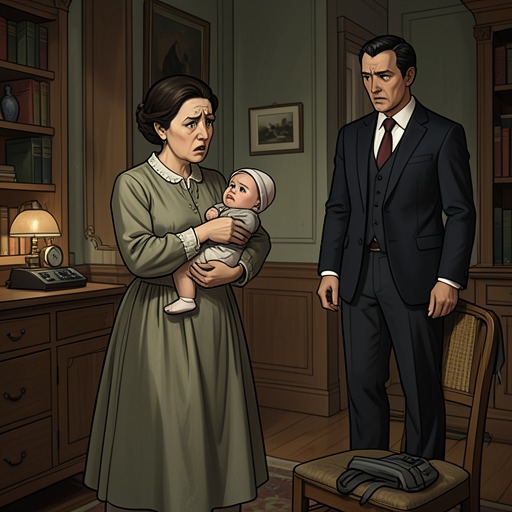
The Time Traveler's WifeAlba’s birth is both the arrival of the child Clare has long imagined and a turning point in the family’s struggle with time travel, inheritance, and uncertainty. At Mercy Hospital in the early hours of September 6, 2001, a difficult labour brings Henry’s involuntary disappearances into the delivery room; he vanishes, returns, and receives his daughter as she is born. The scene converts years of fear and hope into a family history that begins with a daughter whose future, like her father’s, cannot be assumed to follow ordinary time.
Background: Wanting a Child
About two years into their marriage, Clare and Henry decided to try for a baby. Clare recalls being absorbed by the prospect of a child who might resemble Henry, imagining its appearance and everyday life with such intensity that babies seemed to appear everywhere around her. Beneath that hope lay questions she did not want to face: Henry was not optimistic about their chances, and she feared his time-travel difficulties might be hereditary or affect a child. The decision to try therefore carried both longing and apprehension, even when the couple did not discuss those fears openly.
That uncertainty acquired a painful history as Clare experienced repeated miscarriages. In October 1997, Henry woke to find that she had miscarried again. The losses help explain why the eventual pregnancy does not simply resolve the couple’s earlier anxiety: the birth is the outcome of a desire repeatedly endangered, not a straightforward passage from decision to fulfillment.
In 2000, Henry secretly went to a medical office on Sheridan Road to have a vasectomy. His decision reflected the risks and losses surrounding their attempts to have a child, but it did not prevent Clare from becoming pregnant. When she told him, he initially began to ask how it could have happened, then remembered a night from 1996 when they had been trying to conceive. The same event occupied different positions in their lives: for Henry it belonged to years earlier, while for Clare it was only weeks past. His response, a dry acknowledgment of the surprise, exposes how their mismatched experience of time could shape even the origin of a pregnancy.
Labour at Mercy Hospital
The birth is dated Wednesday, September 5, to Thursday, September 6, 2001. Clare’s contractions had been recurring throughout the day; she briefly slept, woke at half past three in the morning, and asked to go to the hospital. Henry knew from what he had already seen that Clare and the baby would be all right, but foreknowledge did not spare him the worry of waiting beside her.
Gomez drove Clare to the emergency entrance at Mercy Hospital, with Charisse accompanying them. Clare’s waters broke just after they arrived. At the hospital, her labour intensified; a nurse, Gomez, Henry, and later Dr. Amit Montague helped care for her. As Clare’s pain grew, the staff administered an epidural, and Montague tried to calm her and reassure her about the baby. Clare asked Henry to recite a poem during the difficult hours, drawing on a shared language of intimacy at a moment when both were frightened.
The delivery brought a fresh concern when the fetal monitor showed that the baby’s heartbeat was very fast. Montague told Clare that the baby was frightened and urged her to remain calm. With reassurance and medication, the tension in the room eased enough for Clare to continue. She was moved to the delivery room as daylight came, with Henry walking beside her.
Henry’s Disappearance and Return
During the birth, Henry disappeared. Clare, already in the delivery room and pushing, realized that he was no longer beside her. His absence was brief in the scene’s immediate action but carried the familiar danger of his condition: at the moment when Clare most needed him, his presence could not be guaranteed.
Henry then reappeared naked and disoriented, as his involuntary time travel repeatedly left him without clothing. He returned before the delivery was over. Clare’s relief at seeing him back and the urgency of the birth coincide: she continued pushing, and Alba’s head emerged. Henry was there to catch his daughter as she was born. The episode makes the family’s central conflict concrete without interrupting the birth’s outcome: time travel separates Henry from the present, but on this occasion it does not keep him from the moment of Alba’s arrival.
Alba Arrives
After the delivery, Clare felt emptied and released; Alba cried, and was placed on her mother. The newborn had black hair, pink, creased features, and eyes that searched without focusing. She reached toward Clare’s breasts, then paused, exhausted by the effort of arriving. Henry leaned over Clare, touched the baby’s forehead, and spoke her name: Alba.
The birth’s immediate ordeal gave way to a quieter family scene. Later that day, Clare held Alba in the hospital room among balloons, teddy bears, and flowers while Henry took photographs. When Richard came to visit, Henry invited him to hold the baby. Richard told Clare that Alba was beautiful and remarked to Henry that she looked like his mother. Henry answered that his father’s violinist had skipped a generation. The exchange connects Alba’s first day to the family’s earlier generations, giving the new child a place in a history shaped by music, memory, and loss.
Significance and Aftermath
The birth fulfills a wish Clare had carried through marriage and miscarriage, but it does not settle the uncertainty that attended their attempts to conceive. The pregnancy had occurred despite Henry’s vasectomy, and the couple had long worried that his condition might be inherited. In a later conversation about allowing research to use Alba’s DNA, Henry argued that the research might give her a safety net if she did not want to live with time displacement. He feared that she might one day be lost or in danger and wanted to help her, while acknowledging that she might instead love time travel. The discussion shows how the birth’s hope becomes inseparable from parental responsibility for a future neither parent can control.
Alba’s birth also alters the meaning of Henry’s disappearances. Before she arrives, the prospect of a child is primarily a question of whether Clare and Henry can become parents; afterward, it becomes a question of what their daughter may inherit and how they might protect her. Henry’s return to the delivery room cannot promise that he will always be present, but his hands receive Alba at the decisive moment. The scene therefore joins a singular arrival to the book’s recurring pattern of absence and reunion, while establishing the next generation as part of its time-travel story.